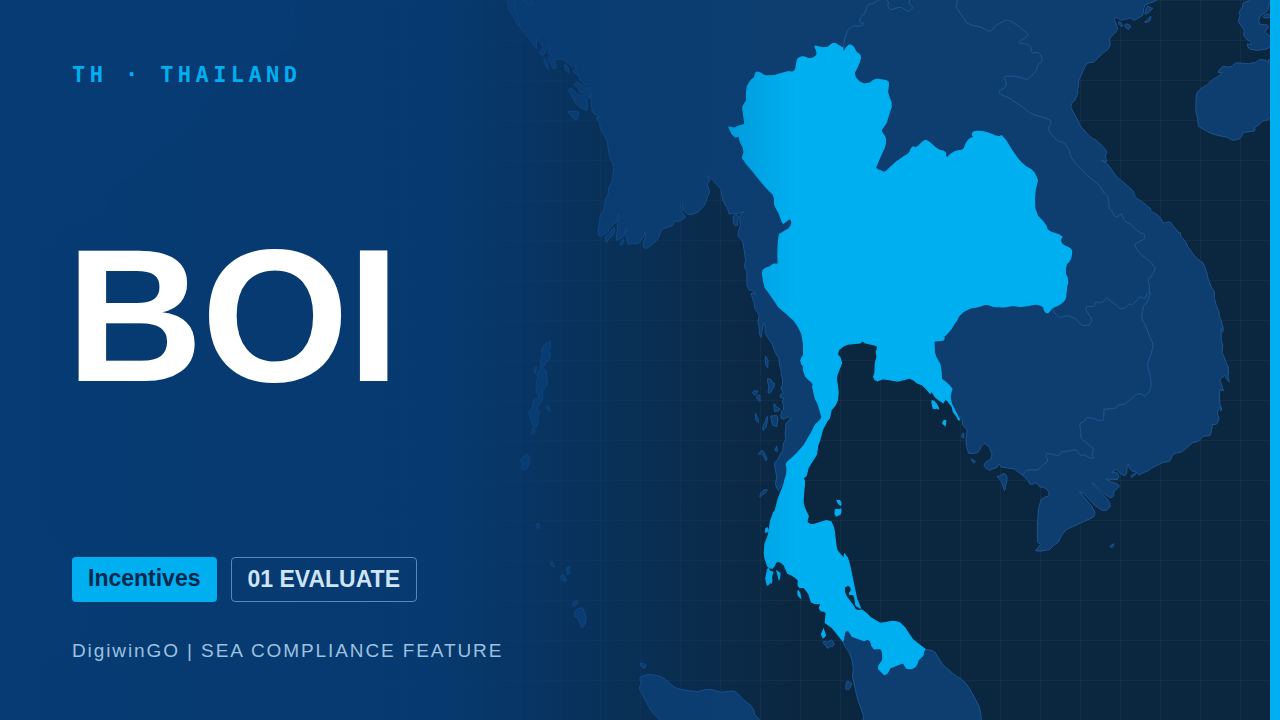
Three Key Terms for Setting Up in Thailand: BOI, IEAT, EEC
Three Key Terms for Setting Up in Thailand: BOI, IEAT, EEC
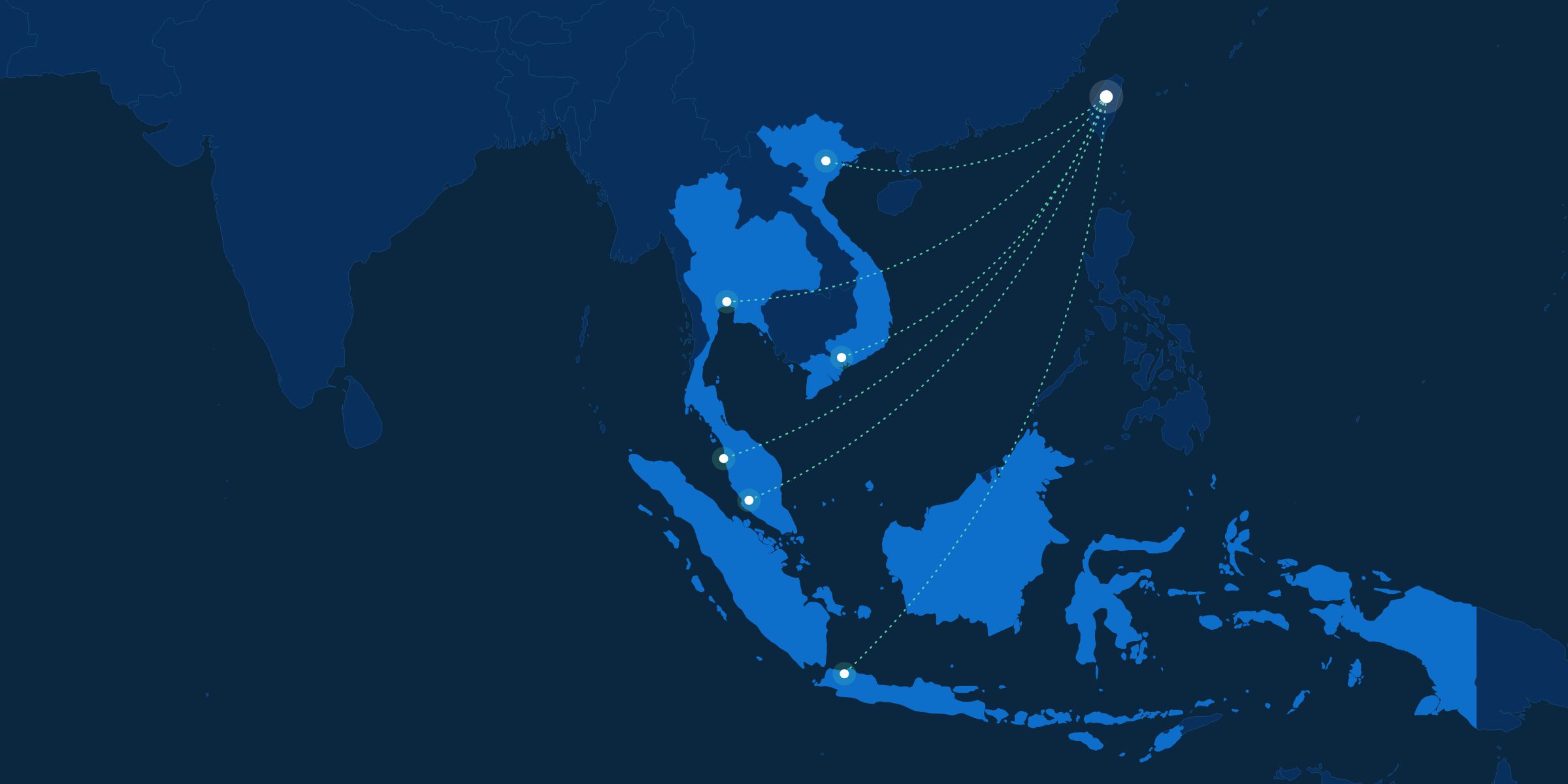
Tax, customs, investment incentives and ESG rules are tightening in step across Vietnam, Thailand, Malaysia and Indonesia. 30 expert articles, ordered by the stage your factory is at.
OVERVIEW
SEA factory compliance covers the investment status, tax and accounting, customs and bonded-zone, and labor, ESG and cybersecurity rules a manufacturer must meet when building and operating in Vietnam, Thailand, Malaysia or Indonesia. In 2026 all four markets tighten at once: audits go digital, e-invoicing and new accounting standards take effect, and the cost of maintaining tax incentives rises.
Compliance is no longer paperwork to catch up on after go-live. It has to be designed in from the start, from investment structure to accounting systems to shop-floor management.
Next key date: BOI progress reporting moves from semi-annual to quarterly; the next deadline is end of November 2026 (Q3).
2026 CALENDAR
Filing deadline for April-June progress.
Filing deadline for July-September progress.
The transition period for paper vouchers under the new e-invoicing regime ends.
All 11 dates and legal bases are covered in the articles; grey items are past deadline.
READING PATH
01
Your investment status decides the incentives you get and the filing duties you take on. From BOI and EPE to the global minimum tax, run the numbers before you land.
Three Key Terms for Setting Up in Thailand: BOI, IEAT, EEC
After Vietnam's 2026 EPE Rules: Stay EPE or Convert?
02
Chart of accounts, bonded ledgers, labor contracts and cybersecurity rules are cheapest to get right before opening. Retrofitting costs the most.
03
Beyond e-invoicing, transfer pricing, customs reconciliation and BOI reports, CBAM and carbon reporting decide whether you stay in global supply chains.
Vietnam Tax Turns Strict: Four Risk Points to Audit First
CBAM 2026: Three Steps to Self-Check Your Exposure
SELF-CHECK
Two checklists you can run as-is to find the most likely problem areas first.
Subscribe to regulatory updates